Experience The World War II Tunnels
World War II Tunnels, Gibraltar
The World War II tunnels were built by the Royal Engineers during the 1940s, when Britain was at war with Germany and Italy. At the time, the future of Gibraltar looked uncertain, as Axis forces dominated much of Europe and an attack on the fortress appeared highly probable.
Winston Churchill and the British military leaders believed that an attack on Gibraltar was imminent therefore the answer was to construct a massive network of tunnels, to build a fortress inside a fortress, a city within a city.

Follow in the Footsteps of Churchill...
In May 2005 the World War II Tunnels were opened to the general public and now you too can follow in the footsteps of Churchill, Sikorski and De Gaulle and walk through this amazing testament to the soldiers and civilians who toiled in the very bowels of the Rock during the darkest days of the War.

After recent upgrades for a new, modern exhibition, visitors can now see a remarkable artifact: a Supermarine Spitfire!
Named after Supermarine Aviation Works where it was developed, the Spitfire was much loved by its pilots and operated in several roles, including interceptor, photo-reconnaissance and fighter-bomber.
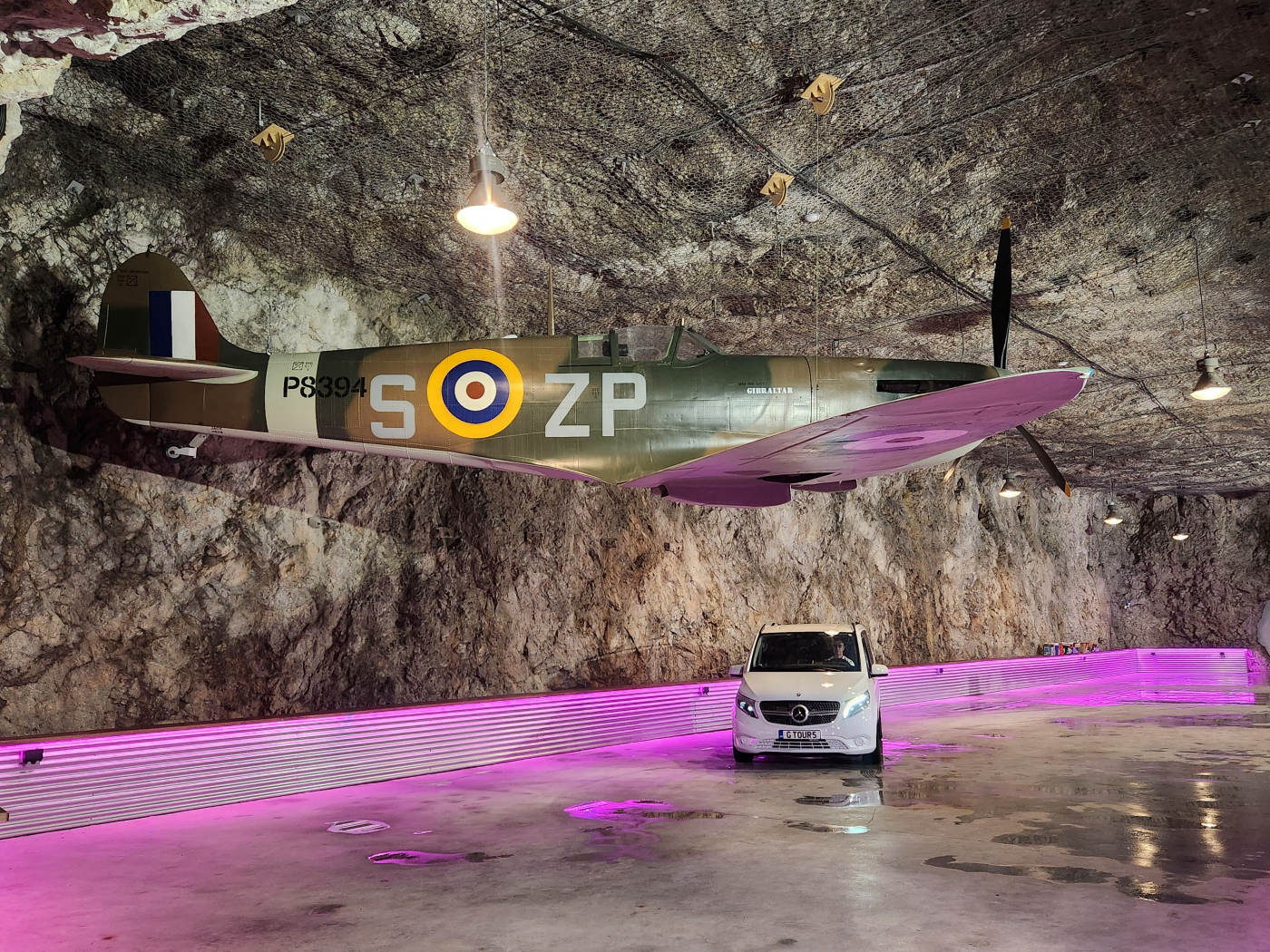
The plane was part of a strategic effort to provide air support to the Mediterranean during the war. Today, it remains on display in the tunnels, showcasing both the ingenuity and resourcefulness of wartime engineering.

Bookings for Gibraltar Tours
To book your Gibraltar Tour, simply book online, or contact us and we will get back to you within 24 hours with a price and availability.

FAQ
The World War II Tunnels are a massive network of tunnels constructed by the Royal Engineers and Canadian Army during the 1940s. Designed to protect Gibraltar's military forces and vital supplies from attack, the network became an underground fortress — effectively a “fortress within a fortress” and a “city within a city.”
The tunnels were constructed because British military leaders believed an attack on Gibraltar was highly probable during the Second World War. The extensive underground network was intended to provide protection and support a large-scale military operation within the Rock.
Yes. The newly refurbished World War II Tunnels experience features new displays and attractions that bring Gibraltar's wartime history to life. Visitors can explore the tunnels and see new exhibits, including a Supermarine Spitfire displayed inside the tunnels.
Following recent upgrades for a new modern exhibition, visitors can now see a Supermarine Spitfire displayed inside the tunnels. The aircraft was used in several roles during the Second World War, including interception, photo-reconnaissance and fighter-bomber operations.
There are also numerous displays showcasing Gibraltar's vital role in the war, particularly as a base for Allied operations in North Africa and its strategic position controlling the Strait of Gibraltar.
Also during the Second World War, Gibraltar's civilian population was evacuated from the Rock, while those who remained faced wartime restrictions and lived alongside a major military operation as Gibraltar became a crucial Allied base. You can learn about personal, local stories and experiences within the tunnels.
The World War II Tunnels are closely connected to some of the most significant figures of the Second World War, including Winston Churchill, General Sikorski and Charles de Gaulle. Exploring the newly refurbished tunnels gives visitors a fascinating insight into the strategic importance of Gibraltar and the people whose wartime operations and decisions were connected to the Rock.
Yes! The newly refurbished experience also includes The Tunneller’s Rest, a WWII-themed bar inspired by a 1940s officers’ mess, where visitors can stop for a drink and refreshments. 🍺