100 Ton Gun, Gibraltar
The 100 Ton Gun actually weighs just over 100 tons and is one of only two remaining examples of its kind in the world today. Four of these enormous guns were built in 1870, with two intended for the defence of Gibraltar and the other two for Malta. Gibraltar’s 100 Ton Gun is located at Napier of Magdala Battery, which is a stop on some of our Gibraltar Tours.

The gun has a 32-foot-long barrel and could fire a 2,000-pound shell up to 8 miles, reaching a muzzle velocity of around 1,500 feet per second. Its immense firepower allowed the shell to penetrate more than 2 feet of iron.
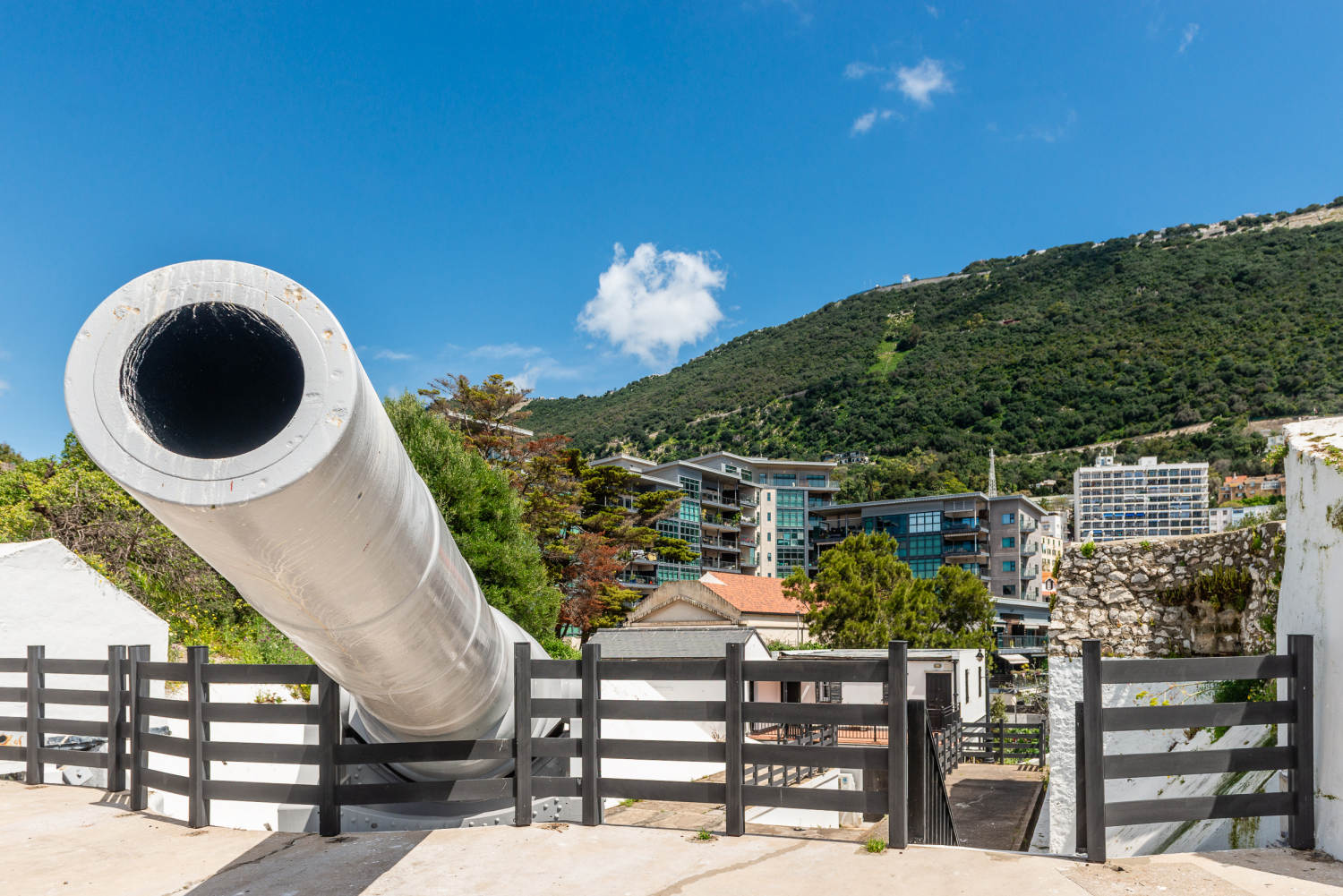
Visitors can also explore the museum, where exhibits tell the story of this powerful Victorian-era weapon and its role in Gibraltar’s military history. The 100 Ton Gun provides a fascinating insight into the coastal defences that once protected the Rock and the surrounding waters.
Bookings for Gibraltar Tours
To book your Gibraltar Tour, simply book online, or contact us and we will get back to you within 24 hours with a price and availability.


